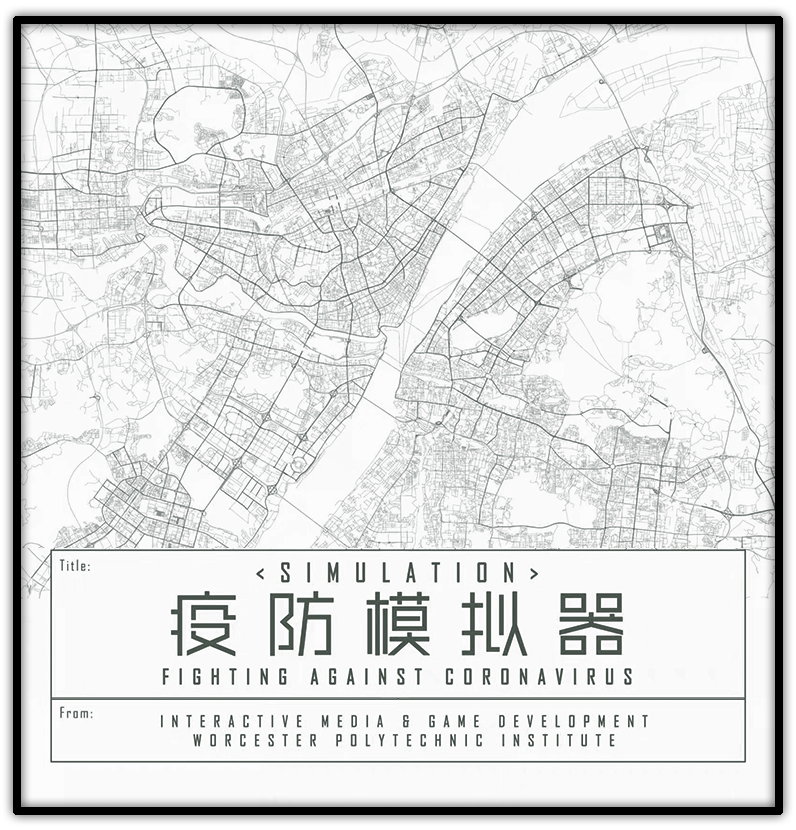
COVID Control Simulator
Tags: Serious Game Playful Data Visualization Simulator
Date: Jan. 2020 - Jun. 2020
My Role: Lead Designer and Developer.
Team Size: 3
A serious but playful strategy simulation with an epidemiological dynamic SEIR model for city-level pandemic response, public-health tradeoffs, and data-informed decision-making. The project incorporated information from real news sources, scientific data, and our team's positionality as native Wuhan residents. It was featured by WPI News.


The project began in early 2020, as the first wave of COVID-19 swept through Wuhan. Motivated by our personal experiences and the desire to help others understand the complexities of pandemic response, we set out to capture the difficult choices faced by government officials during a crisis. Based on our team's experiences and positionality as native Wuhan residents, we designed the game to immerse players in the difficult tradeoffs involved in pandemic response. The game asks players to make responsible decisions under uncertainty, showing how delayed, careless, or poorly coordinated actions can produce cascading consequences for the affected population. It uses simulation and interactive systems to make the relationships among disease transmission, public communication, resource allocation, and civic responsibility more visible.
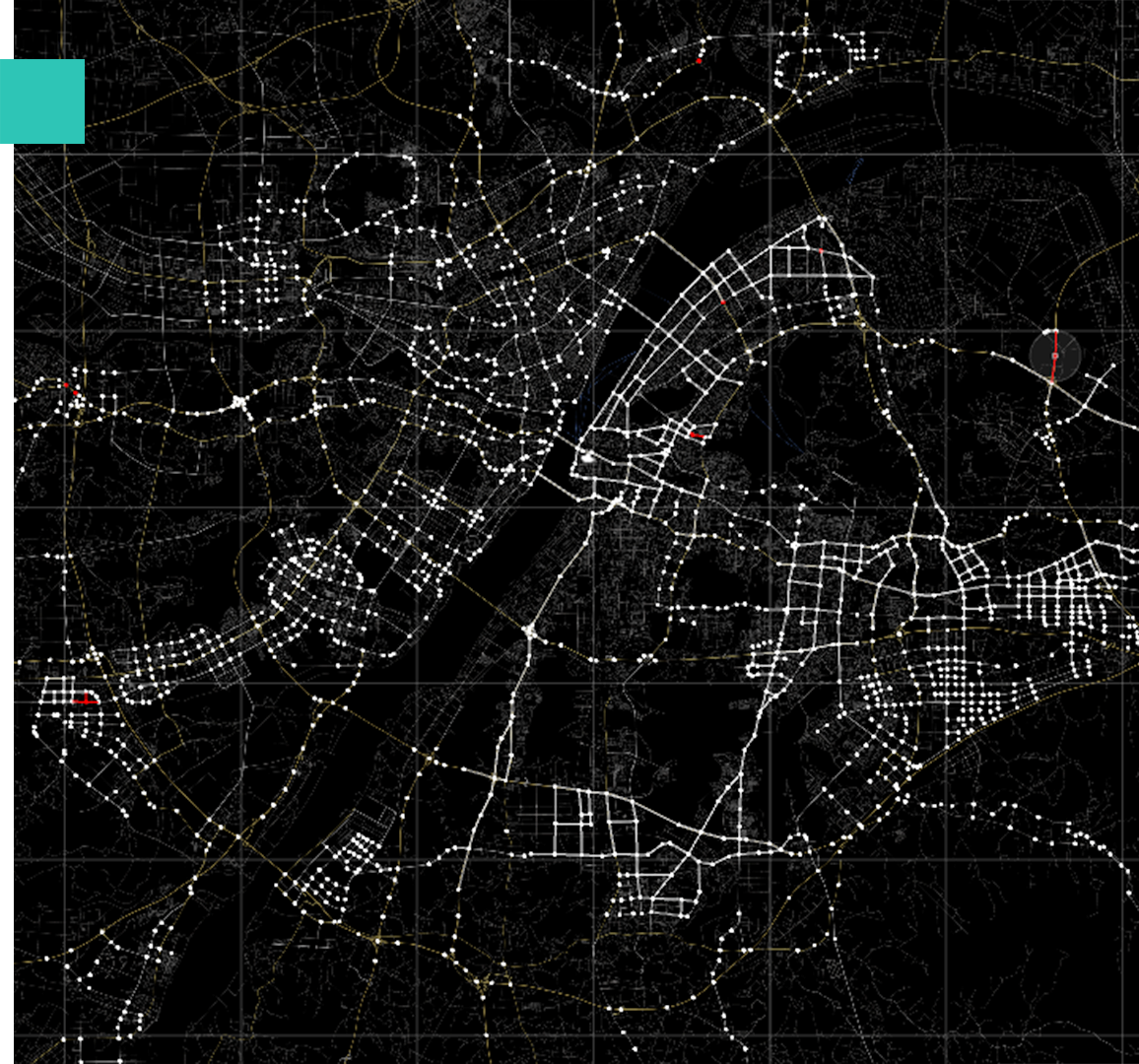
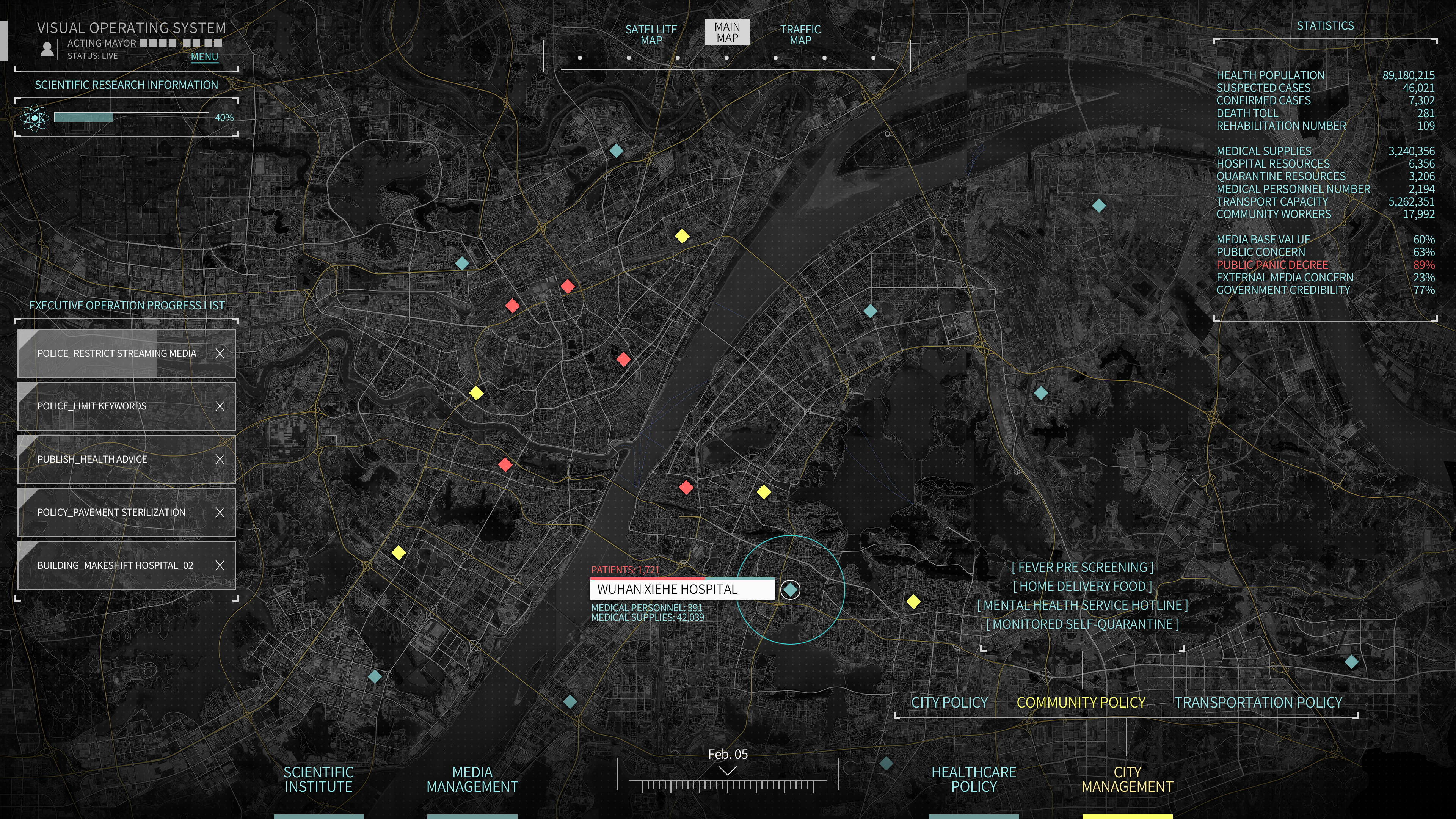
Game's interface in Unity3D
COVID Control Simulator
Fighting Against Coronavirus is built on a systems engineering approach, utilizing a modified SEIR (Susceptible-Exposed-Infected-Recovered) transmission model to capture the complex dynamics of a viral outbreak. Key epidemiological parameters, such as infection rate, incubation period, and recovery rate, are dynamically influenced by player decisions, city policies, and resource availability. Policies like mask mandates, public transportation suspension, disinfection, and quarantine measures all feed into the simulation, reflecting their real-world impact on transmission.
Beyond just disease modeling, resources such as hospital beds, medical staff, and surgical masks are tracked and directly affect both health outcomes and available actions. A layered media system models public concern, panic, satisfaction, and government credibility, allowing players to manage information flow and citizen morale through simulated news and social media (rewritten from authentic sources). Research progress and pressure on scientists affect not only future healthcare capabilities, but also the pace at which new solutions can be deployed.
These interlocking systems create meaningful feedback loops: for example, inadequate healthcare capacity or mismanaged communication can trigger public panic or reduce government credibility, while smart policies and successful research can stabilize the city. Every choice ripples through the simulation, making holistic, adaptive thinking essential and immersing players in the genuine complexity of pandemic response.
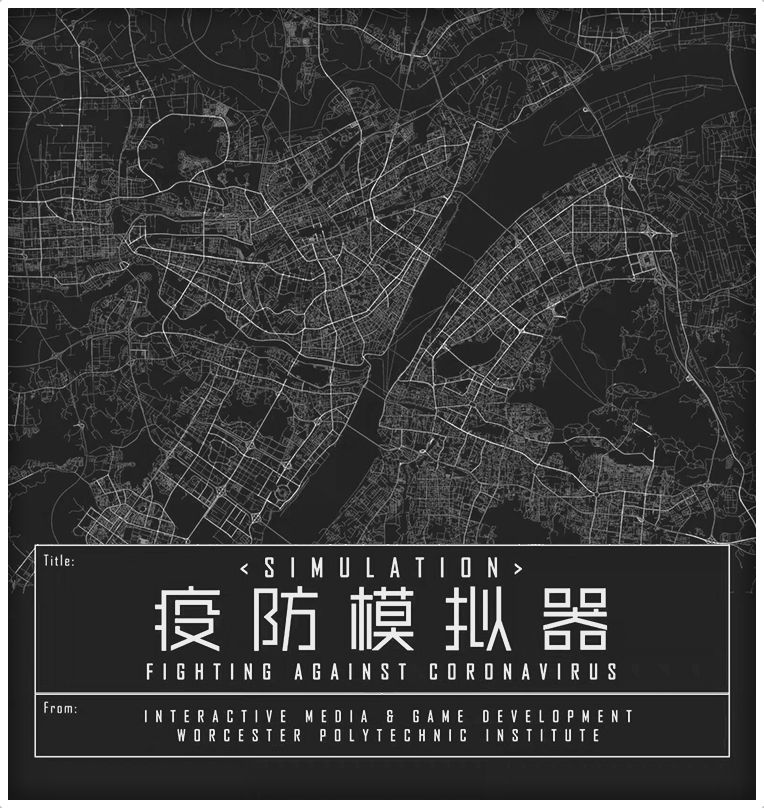
The Game Trailer
Project: Covid Control Simulator
The Page Last updated: May 23, 2026